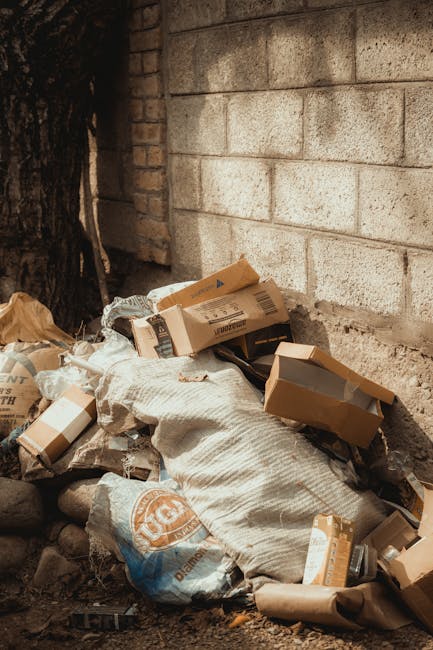
Chingford bulky rubbish removal near Highams Park advice: a practical local guide
If you are staring at a broken wardrobe, an old sofa, a mattress that has seen better days, or a garage full of odds and ends, you are not alone. Chingford bulky rubbish removal near Highams Park advice is usually about one thing: how to clear large unwanted items quickly, legally, and without turning a simple job into a weekend headache. In a part of London where parking, access, and narrow residential streets can make everything slightly more awkward than it should be, a bit of good planning goes a long way.
This guide walks you through how bulky waste removal works, what to check before booking, where people often go wrong, and how to choose the right approach for homes, flats, landlords, and local businesses. It is meant to be practical rather than theoretical. Because let's face it, nobody wants to spend half a Saturday wrestling a sofa down the stairs and then realise it could have been handled much more cleanly.
Table of Contents
- Why Chingford bulky rubbish removal near Highams Park advice Matters
- How Chingford bulky rubbish removal near Highams Park advice Works
- Key Benefits and Practical Advantages
- Who This Is For and When It Makes Sense
- Step-by-Step Guidance
- Expert Tips for Better Results
- Common Mistakes to Avoid
- Tools, Resources and Recommendations
- Law, Compliance, Standards, or Best Practice
- Options, Methods, or Comparison Table
- Case Study or Real-World Example
- Practical Checklist
- Conclusion
- Frequently Asked Questions
Why Chingford bulky rubbish removal near Highams Park advice Matters
Bulky rubbish is not just "more rubbish". It is heavier, harder to move, often awkwardly shaped, and more likely to cause damage if handled badly. A damaged door frame, scratched hallway, or strained back can turn a straightforward clearance into a far bigger problem than the item itself.
In the Chingford and Highams Park area, this matters even more because access can vary dramatically from street to street. Some homes have front drive space and easy loading. Others sit on busy roads, behind narrow paths, or in flats where the lift is smaller than the wardrobe you want gone. That is where good bulky rubbish removal advice saves time, effort, and a fair bit of stress.
There is also the wider issue of responsible disposal. Large items should be handled in a way that supports reuse, recycling, and proper waste segregation where possible. If you are sorting out furniture, appliances, or mixed household waste, a reliable route is to use a general waste removal service, or one of the more specific options such as furniture disposal or mattress and sofa disposal.
Another reason this topic matters is timing. Bulky items tend to linger. They sit in hallways, spare rooms, sheds, or garages and quietly steal space. Then one day you realise the room has become a storage unit. It happens to the best of us, truth be told.
How Chingford bulky rubbish removal near Highams Park advice Works
The process is usually simpler than people expect. You identify the items, confirm what can be taken, book a collection, and make sure access is ready on the day. The trick is in the details. A bulky removal job can be quick and smooth when the load is described properly and the route out of the property is clear.
Most people need help with a mix of old furniture, broken household items, garden clutter, garage contents, or renovation leftovers. Depending on the load, you might be better suited to a specific clearance type rather than a broad catch-all. For example, mixed household contents may fit a home clearance, while a room full of furniture is often better handled through furniture clearance.
The actual collection day usually follows a pattern:
- You list the bulky items and describe access.
- You confirm whether any items need special handling, such as appliances or potentially hazardous materials.
- The collection team arrives with the right vehicle and lifting approach.
- Items are removed carefully from the property, then loaded securely.
- Usable or recyclable materials are separated where appropriate.
That sounds straightforward, and most of the time it is. Still, the difference between a tidy collection and a messy one usually comes down to preparation. If there are stairs, tight corners, shared entrances, or no parking right outside, mention it early. A good service should be planning for that, not discovering it while blocking the pavement.
If you are removing a single heavy item, like a fridge or a mattress, a focused service can be more efficient than a full clearance. For example, fridge and appliance removal is useful where old units need careful handling, while larger domestic clearances may suit house clearance or flat clearance.
Key Benefits and Practical Advantages
The main benefit is obvious: you get your space back. But there is more to it than that.
- Less lifting and lower risk of injury: Bulky items can be awkward, heavy, and easy to mishandle.
- Faster turnaround: What might take you a full day can often be handled in a single visit.
- Better access planning: Local collections can be organised around parking, stairs, and building access.
- Cleaner finish: A proper removal service should leave the area swept and usable, not just empty.
- More responsible disposal: Items can be sorted for recycling or specialist handling where relevant.
There is also a practical emotional benefit. It sounds a bit dramatic, maybe, but clearing clutter often resets a room. A blocked hallway feels stressful every time you walk past it. Once the bulky waste is gone, the space feels lighter. Quietly better.
For landlords, letting agents, and anyone dealing with a move-out, the advantages are even clearer. A quick clearance can speed up redecoration, inspections, or re-letting. For offices and small businesses, using a service that understands office clearance or business waste removal can keep downtime to a minimum.
And if cost is part of the decision, the right approach is usually the one that matches the load closely. Paying for a service that is too large for a single item feels unnecessary. On the other hand, trying to "make do" with the wrong method can end up costing more in time, effort, and missed collection windows.
Who This Is For and When It Makes Sense
This kind of advice is useful for a wide range of people. Some are dealing with one stubborn item. Others are facing a complete clear-out. Here is where it tends to make sense.
- Homeowners: clearing lofts, garages, sheds, spare rooms, or old furniture before decorating.
- Tenants: removing leftover items before moving out or at the end of a tenancy.
- Landlords and agents: dealing with abandoned furniture, white goods, or mixed contents after a move.
- Families: clearing space after an upgrade, bereavement, or a long-overdue declutter.
- Small businesses: disposing of office furniture, shelving, archive boxes, or bulky equipment.
- Trades and renovators: shifting old materials, fixtures, or builder-related waste after a project.
Some situations call for specialist clearance rather than general bulky rubbish removal. If the job involves loft contents, for instance, a loft clearance may be the cleaner route. If the waste is from a garden tidy-up, a garden clearance is usually a better fit.
A useful rule of thumb is this: if the item is large enough to need two people, or awkward enough to risk damage on the way out, you are in the right territory for professional bulky removal advice.
Step-by-Step Guidance
If you want the smoothest possible experience, use this simple process. It is not fancy, but it works.
1. Sort the items properly
Separate what is going, what might be donated or reused, and what should be kept. Half-packed rooms create confusion on the day. If an item is staying, move it out of the route first. That little bit of prep saves a surprising amount of time.
2. Identify anything that needs special handling
Appliances, mattresses, sofas, and certain household items may need different treatment. Fridges, for example, are not just another bulky item. If you have one in the mix, it helps to ask about fridge and appliance removal rather than assuming everything goes together.
3. Measure access
Check door widths, stair turns, lift size, and whether there is space to park nearby. This is especially useful in flats around Highams Park and the wider Chingford area, where access can be a bit of a puzzle. Not impossible. Just worth checking.
4. Take clear photos
Photos are often the easiest way to explain volume and access. A few images of the items, the hallway, and the exit route can prevent misunderstandings and make quoting more accurate.
5. Ask what happens to the waste
Responsible removal should not be vague about disposal. Ask whether items are sorted, reused, recycled, or sent for specialist handling. If environmental impact matters to you, look at the company's approach to recycling and sustainability.
6. Book a suitable time slot
Think about neighbours, parking restrictions, school-run traffic, and your own schedule. Early morning slots can be easier for loading, while later times may suit flats or shared buildings better. There is no single perfect time; just the time that causes the least friction.
7. Clear the route before arrival
Move small loose items, open gates, and make sure the path is safe. If you are using a communal entrance, be considerate. The best collections are almost invisible to everyone else.
8. Keep the paperwork simple but complete
If the job involves a business or any regulated material, make sure the records are clear. For general domestic bulky waste, you still want a straightforward confirmation of what is being removed and any terms that apply. That is where proper terms and conditions and transparent pricing and quotes matter.
Expert Tips for Better Results
After plenty of clearances, a few habits consistently make the process easier. Nothing dramatic. Just the sort of common-sense steps that save time.
- Bundle similar items together: Keep furniture with furniture, appliances with appliances, and mixed junk separate where possible.
- Break down what you safely can: Flat-pack pieces, disassembled shelving, and removed doors can reduce load size.
- Protect floors and corners: Cardboard or blankets can help where large items need to travel through tight spaces.
- Be honest about access: It is better to mention a steep path or awkward stairwell upfront than to improvise later.
- Plan for extra items: Once people start clearing, they often find three more things. It happens every time.
A small but useful insight: if you are clearing after a redecorating job, do the bulky waste first, not last. Paint tins, dust sheets, and leftover materials are much easier to manage once the big items are already out of the way.
If the items are mostly sofas or beds, a specialist disposal route can be better than a general run. The reason is simple: larger upholstered items and mattresses take up space fast, and they can be cumbersome to move through narrow hallways. A dedicated option like mattress and sofa disposal keeps the job tidy and focused.
And one more thing. If you are clearing a garage, try to resist the temptation to move clutter from one corner to another "just for now". That is not clearing. That is stage management.
Common Mistakes to Avoid
Most bulky rubbish jobs go wrong for the same handful of reasons. The good news is that they are easy to avoid once you know what to look for.
- Underestimating the volume: A pile that looks small from one angle can fill a van very quickly.
- Forgetting access issues: Stairs, parking, lift size, and door widths need to be considered early.
- Mixing prohibited or special items without warning: Hazardous materials should never be casually lumped in with ordinary rubbish.
- Leaving the clearing until the last minute: Move-out day is not the time to start sorting twenty years of "useful" stuff.
- Choosing the wrong clearance type: A garage job, office job, and furniture-only job are not always the same thing.
One common slip is assuming every bulky item can be removed the same way. That is not quite how it works. A broken wardrobe, a fridge, and a bag of renovation offcuts each raise different handling questions. If there is a chance you have hazardous waste disposal concerns, do not guess. Ask first.
Another mistake is failing to check what you are actually allowed to include. If you are considering mixed loads with a skip or container-style approach, it helps to understand the boundaries of what can go in a skip, even if you are not booking one directly. The principle is the same: not everything should go in together.
Tools, Resources and Recommendations
You do not need much to prepare well, but a few simple tools make life easier.
- Measuring tape: useful for checking doors, hallways, and large items.
- Phone camera: quick photos help with quoting and access checks.
- Marker labels or tape: ideal if you are separating keep, remove, and maybe piles.
- Gloves and sturdy shoes: sensible for light pre-sorting and safe movement around clutter.
- Basic bin bags or boxes: for loose small items that otherwise get lost in the chaos.
For larger domestic clear-outs, it is often worth looking at broader services such as house clearance or garage clearance if the problem has spread beyond a single item. If the space is a rental flat or apartment, flat clearance can be a better fit because access and shared entrances are part of the job.
For business customers, especially if you are clearing desks, chairs, filing cabinets, or office equipment, it is worth separating bulky waste from confidential paperwork. A dedicated confidential shredding service helps keep the two streams apart, which is simple enough but often overlooked.
If you want reassurance about how a provider operates, pages such as about us, insurance and safety, and health and safety policy are useful for checking how seriously the company treats the job. That kind of detail matters more than flashy promises.
Law, Compliance, Standards, or Best Practice
For bulky rubbish removal in the UK, the main principle is simple: waste should be handled responsibly and passed to legitimate disposal routes. If you are a household customer, that usually means using a provider that can collect, transport, and manage the waste properly. If you are a business, the bar is a bit higher because you need to think about record-keeping and duty of care.
Best practice includes:
- describing the waste accurately before collection,
- separating any hazardous or specialist materials,
- using appropriate handling methods for large or heavy items,
- keeping clear records for business-related waste where needed,
- and making sure the provider has suitable procedures in place.
If you are a business or landlord, do not assume a "bulk load" is automatically straightforward. Some items may carry extra handling requirements, and some mixed loads need more careful sorting. The safer approach is to disclose the full picture early. Boring? Maybe a little. Effective? Absolutely.
It is also sensible to read any company policies that help you understand accountability, payment, and service standards. Relevant pages include payment and security, privacy policy, and complaints procedure. You may not need them on day one, but it is useful to know they exist.
Options, Methods, or Comparison Table
Not every bulky waste job needs the same solution. This table gives a simple comparison of the most common options.
| Option | Best for | Pros | Watch out for |
|---|---|---|---|
| Single-item removal | One sofa, mattress, fridge, or wardrobe | Quick, focused, usually efficient | May not suit mixed loads |
| Furniture clearance | Multiple large furniture items | Good for rooms being emptied | Check access and item count first |
| Home clearance | Mixed household contents | Flexible, practical for bigger jobs | Can be overkill for one item |
| Flat clearance | Apartment or shared-entry properties | Useful where access is tighter | Lift, stair and parking details matter |
| Garage or loft clearance | Stored clutter and long-term accumulation | Great for reclaiming space | Often reveals more waste than expected |
| Builders waste clearance | Renovation offcuts, rubble, packaging | Useful after refurb projects | Not ideal for household-only furniture |
The best option is usually the one that matches the actual load, not the one that sounds simplest at first glance. If in doubt, think about the dominant item type and the access route. That usually narrows it down fast.
Case Study or Real-World Example
A typical local scenario goes like this. A family in Chingford has just finished clearing a spare room that had slowly become a storage zone. There is an old sofa bed, a broken chest of drawers, a mattress, two office chairs, and a pile of smaller bits that somehow multiplied on their own. The hallway is narrow, and the front parking is tight in the afternoon.
Instead of trying to drag everything out over several days, they sort the room into clear groups, take a few photos, and book a collection with the access details explained upfront. On the day, the route is clear, the items are ready, and the loading happens efficiently. The room is empty by lunchtime, and the family can finally paint it without stepping over a mattress every five minutes.
Nothing magical happened. The win came from preparation, realistic expectations, and choosing the right type of clearance for the job. Small details, really. But they matter.
In another common case, a small office near Highams Park needs to remove old desks and filing cabinets while also dealing with paperwork. The right approach is to separate the physical waste from confidential documents, use office-focused collection where appropriate, and avoid turning one tidy-up into three unrelated jobs. Smooth, not heroic.
Practical Checklist
Use this checklist before your bulky rubbish removal booking:
- List every large item that needs removing.
- Separate keep, donate, recycle, and dispose piles.
- Check access, stairs, lift size, and parking.
- Photograph the items and the route out.
- Flag appliances, mattresses, sofas, or special items early.
- Confirm whether any hazardous materials are involved.
- Choose the clearance type that best matches the load.
- Review pricing, payment, and service terms.
- Make sure the path is clear on collection day.
- Ask what happens to reusable or recyclable items.
If you can tick most of those off, you are already ahead of the game. Seriously. Many problems happen because people skip the boring bit and hope for the best. Hope is not a plan, not in waste removal.
Conclusion
Good Chingford bulky rubbish removal near Highams Park advice is really about reducing friction. Know what you have, understand the access, choose the right removal route, and be honest about the awkward bits. That is how you save time, avoid damage, and keep the whole experience calm enough to feel manageable.
If your job is a single item, a furniture clear-out, or a larger household or office clearance, the right approach will depend on volume, access, and how carefully the waste needs to be handled. A little planning now can save a lot of frustration later, and that is one of those rare wins that feels better than it sounds.
Get a free quote today and see how much you can save.
And if you are still standing in front of a room full of bulky clutter wondering where on earth to start, start small. One item. One corner. One clear path. That is usually enough to get moving.
Frequently Asked Questions
What counts as bulky rubbish in Chingford and Highams Park?
Bulky rubbish usually means large household or commercial items that are awkward to carry and do not fit into standard bins. Common examples include sofas, beds, wardrobes, mattresses, appliances, office furniture, and garden clutter.
Is bulky rubbish removal better than hiring a skip?
It depends on the job. Bulky removal is often better when you have large individual items, limited time, or poor access for a skip. A skip can suit ongoing renovation waste, but it may not be the easiest option for one-off furniture or appliance removal.
How do I prepare for a bulky waste collection?
Sort the items, clear the access route, measure tight spaces, and take a few photos. It also helps to flag anything unusual, such as a fridge, mattress, or mixed waste, before collection day.
Can I mix furniture with general household rubbish?
Sometimes, yes, but it depends on the service and the type of items involved. Mixed loads are often fine when arranged in advance, but specialist items may need separate handling. It is best to explain the full load clearly before booking.
What if my flat has narrow stairs or no lift?
That is very common in London and usually manageable if it is mentioned early. Access details help the collection team plan the right equipment, timing, and lifting approach.
Are sofas and mattresses removed differently from other furniture?
Often they are, yes. Sofas and mattresses can be bulky in a way that makes handling awkward, so they are sometimes managed through a specific disposal route rather than general furniture removal.
What should I do with old appliances?
Appliances should be identified separately, especially fridges and freezers. They may need specific handling, so it is sensible to use a service that can manage appliance removal properly rather than assuming they can be treated like normal furniture.
How can I avoid hidden costs?
Give a full description of the items, share photos if possible, and ask what is included in the quote. Access issues, extra lifting, and special items are the things that tend to change the price if they are not disclosed early.
What happens to items after collection?
That depends on their condition and the provider's process. Usable items may be separated for reuse, while other materials may be sorted for recycling or sent to the correct disposal route. If sustainability matters to you, ask about this before booking.
Do I need to be present for the collection?
Usually, yes, or at least someone should be available to confirm the items and access. If you cannot stay, make sure arrangements are clear in advance so there is no confusion on the day.
Is bulky rubbish removal suitable for landlords and businesses?
Absolutely. It is often the most practical route for end-of-tenancy clear-outs, office furniture removal, and mixed property waste. For business use, clear records and proper handling matter a bit more than usual.
Where can I find more information about prices and service details?
Service pages such as pricing and quotes, book online, and contact us can help you check what is available and how the process works.